Monday, September 30, 2019

Ketching Up


      Ketchup is an American icon. Ketchup is so versatile, being put on and/or dipped into with fries, hamburgers, chicken tenders, hot dogs, meatloaf, onion rings, baked beans and 93 other things. Ketchup is a potato chip flavor now. And these days you can find sriracha ketchup, curry ketchup, bacon ketchup, mango ketchup, Whataburger's delicious spicy ketchup, and if you had the privilege of being a 90's kid, back in the day you could find ketchup in blue, green, and purple. Ketchup is great at making food taste better. Up until recently, I hated tomatoes, but ketchup has always been my #1 condiment. According to Mobile Cuisine, 97% of Americans have ketchup in their kitchen, and June 5th is National Ketchup Day. Heinz alone sells over 650 million bottles a year. While ketchup is considered a pinnacle of American diets, it actually is not American, nor did ketchup originally come from tomatoes.
     As early as 300 BC, texts documented using soybeans, fish entrails, and meat to create an early ketchup-ish concoction. According to National Geographic, the word "ketchup" comes from the Chinese word "ke-tsiap", which is the name of a sauce that was made from - fermented fish organs, coming from Vietnam in the 1600's. Yes, ketchup did not come from America or tomatoes, it came from jarred Southeast Asian fish bladder. The British, of course, encountered this fish sauce while in Southeast Asia and began to try to replicate it in the 17th and 18th centuries. Those early British ketchups used everything but tomatoes; mushrooms, anchovies, oysters, and even walnuts. The British had already been introduced to tomatoes thanks to South America, but many in England saw them as poisonous. Around 1801 is when the first tomato ketchup recipe was published. This recipe contained brandy and spices, but still no sugar or vinegar. Ketchup evolved over the next few decades with Jonas Yerkes being the first to begin selling bottles of tomato ketchup in 1837.
     With ketchup connoisseurs not knowing how to properly store ketchup early on, plus public health concerns over additives led to the ketchup movement almost failing. One boujee, but right cookbook author in 1866 called commercial ketchup "filthy, decomposed, and putrid." Because of all the additives and chemicals, ketchup was even lethal.  The tomato growing season was short, meaning ketchup could only be made for a few months of the year, but because of supply and demand, ketchup needed to be able to be preserved year long. In an era before regulation, this often resulted in commercial ketchup being spoiled with bacteria, mold, and spores. And in an era before modern medicine, this often meant a lot of sick people as a result. "Death by ketchup" doesn't sound as great as you would think it would sound. 
     In came Henry J Heinz in 1876 who figured that using fresh ripe tomatoes, natural preservatives, and more vinegar was key; no more chemicals and tighter preservation methods. By the 1900's, commercial ketchup began to take over America. 1906 also saw the passing of the Pure Food and Drug Act, which in turn made ketchup less deadly. Before then, ketchup was found more in cookbooks than commercially. 
     Not only has ketchup served as America's condiment, at one point it was seen as medicine. In 1834, a physician from Ohio named Dr. John Cook Bennett declared that tomatoes could be used to treat indigestion and diarrhea. Dr. Bennett published tomato ketchup recipes, which were turned into pills.
     Ketchup has had a colorful history and it goes to show how food can amazingly evolve over time. Early ketchup was salty and bitter, but now it's sweet and savory. From fish stomachs left in the sun to tomatoes and vinegar, ketchup has came a long way to accompanying our chicken nuggets.
     Also a side, the "57 varieties" in Heinz means nothing. The "5" was Heinz' lucky number and the "7" was his wife's. When Heinz decided to put that on bottles, his company was already producing over 60 products anyway. Also, if you happen to be in the Collinsville, Illinois area anytime soon, be sure to pull over and get an Instagram selfie with the World's Largest Catsup (Ketchup) Bottle.


*Maxim, National Geographic, History, Mobile Cuisine, Smithsonian, The Spruce Eats, Fast Company

Monday, July 29, 2019

Clear Purple Sky

   
     Ever taken a look at the sky during the day? Notice how it's blue? Good, so you're not crazy, but you are seeing things. While we have always perceived the daytime sky as "blue", according to scientists, the sky is actually in fact "purple." It's the ingenuity of the human eye and brain that makes us think and see otherwise.
     As you already know, we receive our light from the Sun. While light appears "white", it is actually made up of a spectrum of colors. When that light is bent, those colors can be seen. This is why our sky appears blue and not red, yellow, or green. The light from the Sun is bent by molecules in our atmosphere, which causes the light to scatter. This is called Rayleigh scattering and it is more prominent with the blue/violet end of thespectrum. The fact that we even have a daytime and a colored sky is because Earth has an atmosphere. Mercury, the closest planet to the Sun, is completely dark because there is no atmosphere to bend and scatter light.v  Red light contains longer wavelengths while blue and violet light are shorter. Shorter wavelengths are scattered more, so during the day, the blue wins. Sunsets and sunrises appear red because the Sun is magnified being so close to the horizon, which means the waves of red light win. This picture from Live Science simply explains it.
     So since the shorter the wavelength means the more scattered the light, wouldn't purple win out over blue? Correct, and is does; the sky is purple, but the reason we don't see it that way is simply the structure of our eyes. According to Forbes and the Rochester Institute of Technology, our eyes contain rods and cones which allow us to process light and color. The cones in our eyes are most sensitive to short, medium, and long wavelengths, which is the same as saying blue, green, and red. 
     Our blue-sensitive cones would be stimulated the most by blue light, but the green and red cones experience a little stimulation as well. If the sky truly was blue, then to our eyes it would appear as greenish-blue. While violet is the most scattered color in the sky, our eyes are not as sensitive to violet as they are blue. Yet our red cones are actually more sensitive to violent than blue, so if red cones dominated our eyes, violet with a tinge of red is what we'd. When all 3 types of colors are combined: the reddish tinge of violent, the bluish green tinge, and blue and violent, it all equals a pale blue sky that we have come to know and love. This all also means that animals perceive colors differently as well since the types of rods and cones vary among animals. 
     Don't freak out now and think that you have been lied to all your life. The sky may in reality be purple, but it's likely not as deep of a purple that you would imagine. Most ultraviolet light is blocked by the atmosphere, and the Sun lets off less violet light than the other colors. Still, it's a fascinating phenomenon, and it's also not unique Earth. 


*picture from BBC, links from Forbes, Rochester Institute of Technology, Live Science, HyperPhysics

Tuesday, May 29, 2018

Blue's Clue


It's cool to be blue. According to Digital Trends, Instagram posts that contain majority blue objects or backgrounds get 24 percent more likes than any other color. Blue is a fascinating color that has played a role in science, religion, fashion, art, history, music, politics, culture, marketing, and even pants. Blue is seen as the color of comfort, harmony, and confidence. Blue is also seen as the color of sadness, masculinity, intelligence, concentration , mourning, and coldness. Blue is the world's favorite color (and mine), winning 23 to 33 percent of the vote. There's many reasons why blue is a miraculous color that's not the same as the others.
     Color comes from the electromagnetic spectrum and from natural resources. Visible light, which contains the rainbow, is the only wavelength that humans can see. While the spectrum is how we see blue, pigments and dyes from flowers, rocks, and the roster of the periodic table is how we make it. Blue also gets free advertising from the sky and oceans. In reality, the sky is purple, but because of "Rayleigh scattering" and our brains, it appears blue to our eyes.
     According to AC Lens, an estimated 8 percent of the world's population has blue eyes. Blue eyes are frequently found in people with northern European ancestry. Many scientists believe that blue eyes formed from a genetic mutation that affected the "OCA2" gene, which is involved in melanin production and eye, skin, and hair pigmentation. Blue eyes also aren't really blue - they appear blue because of the Tyndall effect, which is similar to Rayleigh scattering. The iris is the colored part of the eye, which is made up of two layers: the stroma and the epithelium. The epithelium contains black-brown pigment while the stroma is colorless collagen. People with blue eyes lack melanin in their stroma, which means that light is not absorbed in the iris. Instead, light is scattered, and like the sky, it's blue wavelengths that win. So there you have it, blue eyes aren't technically blue at all, who knew? "Atmospheric perspective" is another similar concept which explains why mountains in the distance appear blue. 
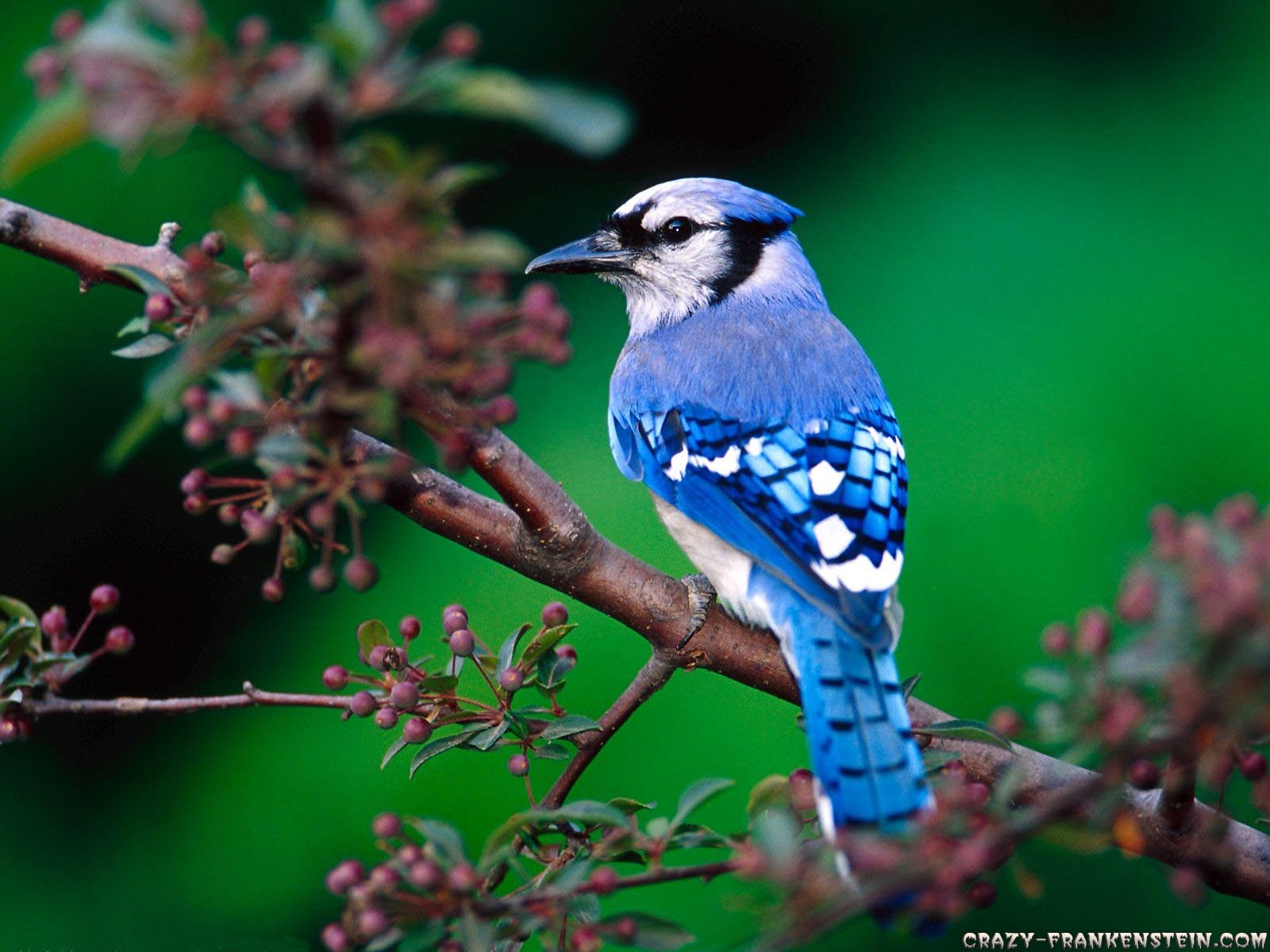
     Blue animals are rare. How many true blue animals can you name? There's blue jays, dart frogs, butterflies, crabs, peacocks, jellyfish, and Dory, but then it starts to get hard. According to Mother Nature Network, while plants can produce blue pigments due to anthocyanins, most animals cannot make blue pigment. Animals that do appear blue, such as the blue jay, is typically the result of structural effects such as reflection and iridescence (why bubbles appear multiple colors). The Bangor Daily News agrees: cardinals are red in the sense that their feathers really contain red pigment - carotenoids (which is also why carrots are orange). Yet blue jays are blue because of structures in their feathers that filters certain light, not because their feathers have blue pigment.
     Blue pigment is also a hard color to find in food and coloring. Strawberries and cherries give off red. Peaches, bananas, lemons, and pineapples are yellow. Leafy greens, limes, and broccoli squeeze out green. Blueberries? While the berry may be blue, the juice is not. 23 years after introducing blue M&M's, Mars Foods is still trying to find a suitable natural blue dye for them. There is a search for one for Trix cereal too. In 2009, a grad student at Oregon State University accidentally discovered a new kind of blue pigment in the lab after mixing and heating chemicals, the first discovery in 200 years. Crayola has now introduced that new blue to their famous 24 pack, kicking out dandelion yellow.
     One crazy thing that makes blue unique is that it is believed that it didn't "exist" to most people until modern times. As stated, blue is rarely found in nature, and even the sky isn't really "blue." And if you have no idea of what "blue" is, then is it really blue? Matter of fact, the mention of blue in language hasn't been found in texts older than 4,500 years old. In "The Odyssey", Homer describes the ocean (?) as "wine-dark." In 1858, William Gladstone analyzed "Odyssey" and found oddities such as honey being described as "green" and sheep as "violet." The color black was mentioned near 200 times and white 100 times. Red was mentioned fewer than 15 and yellow and green fewer than 10. Yet, no mention of blue. The word "blue" didn't really exist, which isn't that crazy considering how rare blue is in nature.
     A philologist (studies languages) named Lazarus Geiger studied other cultural texts, such as Chinese, Arabic, Icelandic, and Jewish, and blue as we know it was not mentioned. Other than the Egyptians who had blue dye, blue was the last color to start to appear to be mentioned in cultures.
     According to Business Insider, a study was done with the Himba tribe in Namibia who have no word for blue and don't distinguish between green and blue. They were show 12 squares: one blue and eleven  green. None of the members of the tribe could immediately pick out the blue square, yet when shown 12 green squares, they could pick out the one that was subtly different than the rest. To put it another way, while we can differentiate between "true green" and "light green", the Himba tribe and many of our ancestors probably registered blue as just another shade of green instead of it's own color since they didn't know the concept of blue. Welsh, Japanese, and Chinese cultures also had words for the color "grue", but not blue itself. To everyone, it was just another shade of green. 
     Another study done by MIT in 2007 showed that native Russian speakers who don't have a word for blue, but yet do for "light blue" and "dark blue" can pick out shades of blue much faster than English speakers. So basically, even if your eyes can see millions of colors, the language you speak can determine how you recognize color.
     Blue may be just another wave on the length, but it's a special one, and not just because I'm bias. Don't take blue for granted. Those "blue eyes" you use to see "blue jays" zooming across that "blue" sky right before the "blue" moon could just as easy be one of the other ugly, not-blue colors.


*AC Lens, Live Science, NPR, WBUR, Science Alert, Wikipedia, You Gov, Mother Nature Network, Bangor Daily News, Business Insider, IFL Science, New Scientist, The Conversation, New York Times, Digital Trends

Thursday, May 3, 2018

World War Bacon

   
     Bacon has been involved in a heavily contentious war for ages, and not just between carnivores and herbivores. The health community has been divided on whether bacon is a good, healthy food, inside and outside of breakfast. While the consensus used to lean towards bad, it seems the good side has had the stronger pull lately.
     Everyone is aware that bacon contains fat, but as we've learned, not all fats are created equal. The three main types of fat are saturated fat, unsaturated fat, and trans fat. Trans fat is man made fat and is considered the big no-no by everyone. Unsaturated fat can be found in nuts, seeds, and fish, and is universally agreed on being the fat that your body always needs. Saturated fat, typically found in meat, used to be considered the devil, but now it is becoming more agreed upon that natural saturated fat shouldn't be actively avoided, though you shouldn't consume it as heavily as you would unsaturated fat. As it turns out, bacon is full of unsaturated and saturated fat, but contains no trans fats. This acceptance of saturated fat has led to an acceptance of bacon. According to Healthline, 50% of the fat in bacon is monounsaturated or "good" fat, which is also found in olive oil. 10% is polyunsaturated, which is also considered healthy, and the remaining 40% is saturated fat. The cholesterol in bacon is also not seen as negatively today as it used to be.
     Nitrites and nitrates have been a concern, but according to Healthline, bacon contains less nitrosamine, a known carcinogen, than it did in the past. Vitamin C being added to bacon has also reduced the presence of nitrosamine, though it can still be dangerous in high quantities.
     Another issue typically raised with bacon is the sodium. Because most commercial bacon is cured to preserve the meat, a lot of salt is used. Yet just like fat, the evils of sodium aren't seen as strongly today as in the past. You shouldn't eat a bowl of salt for breakfast, but completely steering clear of it is not good for you either. Sodium helps the brain, muscles, heart, and skin, and it helps your body remove carbon dioxide. That said, too much sodium can cause high blood pressure, water retention, bone loss, and more. Uncured bacon is out there if you want to avoid the sodium as much as possible, though taste may vary.
   Typically not talked about by the anti-bacon coalition, bacon contains vitamins B1, B2, B3, B5, B6, B12, phosphorous, and selenium. Iron, magnesium, zinc, and potassium can also be found in bacon. All are nutrients that your body needs. According to Bacon is Magic and Bacon Today, bacon also improves your mood, protects your heart, fuels your brain, and can even power your car. HealthWire claims that bacon can stop food cravings, provide you a low carb meal, and raise good cholesterol.
     While things are looking up for bacon, there are still some studies that say not so fast. One study claims bacon and other processed meats could be linked to a lower sperm count. Another study claims that factory farmed pigs are more likely to get you sick than free range, which is an issue considering many consumers don't take the time to compare brands. And a study from the University of Zurich believes bacon could still contribute to heart disease and cancer.
     Bacon also needs to be cooked to perfection, aka done. Overcooking bacon can form polycyclic aromatic hydrocarbons and heterocyclic amines or PAH's, which can increase cancer risk. Undercooking the bacon can expose you to pathogens, viruses, and foodborne illness. If you cook the meat fully, then you have nothing to worry about.
     If pork isn't your thing, but bacon still is, luckily bacon doesn't only have to come from pork. There are many alternatives to pork bacon, made from both meat and non-meat sources. Turkey bacon contains less fat than pork bacon, nor does it shrink. Conversely it doesn't have the same crunch or "bacony" taste. Lamb bacon comes from the belly like pork bacon, but the bacon strips are narrow and don't get too crispy. Duck bacon is very salty, but it's full of flavor, but it can also be tough as a carpet if it's overcooked. Pancetta is cured in salt, but it isn't smoked. Shiitake bacon and tempeh bacon are BINO's (bacon in name only). Made for vegetarians and vegans, shiitake bacon is made from shiitake mushrooms and roasted or fried. Tempeh bacon comes in strips, but it's not strips of meat. Tempeh is made from soybeans and the bacon is marinated in savory and sweet sauce. While you won't get that authentic bacon taste from these non-meats, I guess it's better than no bacon at all.
     While bacon is better than it was once believed to be, it's still a processed meat, so you still shouldn't order a big rig full of it to your house. Yet in moderation, bacon is a healthy treat and is much healthier than it looks when it's sizzling in a pool of fat. If you want to make brinner, go right ahead. If you want to journey to an all-bacon restaurant, sure, do it. Just...don't order bacon as the entree and the side.


*My Recipes, HealthWire, Healthline, Bacon Today, Bacon is Magic, Good Housekeeping, Prevention, Huffington Post, Eater, NCBI


Tuesday, March 20, 2018

Happy Feet

   
    Picture this: you're sitting somewhere, waiting for a train, a plane, a class to start, or the doctor to come poking into the waiting room. You put in some headphones to pass the time and play your favorite Spotify playlist. About 15 seconds go by and you notice you're already tapping your feet, humming loudly, and nodding your head. You don't want to draw attention so you stop. 20 seconds later you're back at it again. Why do we do this? Are Metro's beats really that good?
     Turns out that when you listen to music, quite a few things happen. Your heart rate increases, you feel desirable emotions, and multiple areas of the brain are stimulated. One study done at McGill University showed that listening to music can release dopamine, the chemical that is responsible for making you feel good. Dancing is believed to have evolved from rhythmic movement, such as tapping feet.
     According to a study posted in Science Daily, moving to music is a part of a human cognition called "motor theory of perception." According to the theory, when we listen to music, we have a habit of actively simulating the body movements that we believe went into making that sound. Researchers at the University of Oslo also determined that people make sense of what they hear by mentally simulating it to make sense of it.
     There's nothing wrong with being an incessant foot tapper. According to one study, fidgeting helps burn calories, up to 350 a day, and we hate those, right?
     So tapping feet is cool and all, but what's up with humming? Well it's believed that humming has evolved over time and used to be the "contact call" of humans, which is a way animals communicate. Humming is also believed to be a type of relaxer for humans, since sitting in complete silence can be uncomfortable and seen as a sign of danger. Like breathing and putting our fingers in our mouths, humming seems to be something we do unconsciously without much thought.
     An earworm, or "stuck song syndrome" is the habit of humming or moving to a song that you're no longer listening too. You can easily "catch" an earworm: after listening to your new favorite song, seeing the same annoying commercial, or watching the intro to your favorite 90s sitcom. Even seeing something that reminds you of the sound. Who hasn't hummed the Disney theme after popping in the Lion King VHS tape?
    No one knows what causes them, though it's believed that 98% of people experience them. One study found that lyrical songs may account for 73.7% of earworms, while instrumental music may only account for 7.7%. A piano piece, or Bruno Mars? Hmm. It's also believed that musicians and people with OCD suffer the most earworms. Earworms typically don't last more than 30 seconds and they're very forgettable. Humming is also believed to be contagious, just like yawning, and is also believed to have benefits on the body and mind.
     Tapping your feet and nodding your head is natural. Music influences us and moving to it is what we're supposed to do. If tapping your feet or nodding your head does annoy you though, well hey it's at least better than tinnitus.


*Fast Company, Washington Post, Science Daily, Psychology Today, Skyword, Scientific American, The Straight Dope, Quora, Rejuvenation Lounge, Joseph Jordania "Time to Fight and Times to Relax: Singing and Humming at the Beginnings of Human Evolutionary History."


Thursday, March 15, 2018

Arguing over Peanuts

    
     Peanut butter is a world delicacy. According to the American Association of Agronomy, we spend over $800 million a year on it. The average American child has 1,500 PB&J's before high school graduation. January 24 is National Peanut Butter Day in the US. We take peanut butter so seriously that according to Atlas Obscura, Stuart Parnell, the former CEO of the Peanut Corporation of America, was sentenced to 28 years in prison after knowingly shipping salmonella-tainted peanut butter in 2009. According to Ad Age, Reese's Peanut Butter Cups are the most popular chocolate candy in America. Snickers, the world's #1 brand, contains peanuts as a main ingredient. FiveThirtyEight also ranked Reese's as the top Halloween candy. And I mean, come on, it makes sense. Chocolate and peanut butter is the world's best match up. Name a better one, I'll wait. You can even get peanut butter colored paint, and peanut butter interior in your car.
     As it turns out, for peanut butter to be considered "peanut butter" in the United States, it has to contain at least 90% peanuts. While that seems like common sense, it didn't always used to be that way.
     In 1959, the FDA revealed that items labeled as "peanut butter" only contained 75% or so peanuts. Consumers weren't happy about it and started referring to peanut butter as "peanut flavored face cream." Manufacturers were altering recipes to cut costs, such as hydrogenated oils being used instead of peanut oil and using alternative sugars. For the next 12 years, the FDA and the peanut butter industry fought back and forth over how much peanut is enough peanut.
     According to Atlas Obscura, the FDA wanted peanut butter to be 95% peanuts. Jif, Peter Pan, Skippy, and the rest of the brands said “no.” The FDA then said 90%, the PB industry said 87%. In 1964, both sides finally met to try to compromise in what was called the "Peanut Butter Hearings." A few years of peanut butter corporate legal jargon and 8,000 transcript pages later, the hearings ended in favor of the FDA. Regardless, peanut butter moves slow as it took 5 years until the 90% peanut rule became standard in 1971.
        Ruth Desmond was fundamental in the FDA landing the win. She was instrumental in getting changes implemented after the 1959 Cranberry Crisis that included cranberry sauce contaminated with weed killer. She eventually became known as "Peanut Butter Grandma" for her persistent fight.
    The FDA is now more into fighting for accurate labeling than fighting for accurate food. Regardless, what exactly is in our food has become a hot topic as consumers have became more educated about food health.
     From lies and misconceptions about the sugar content in cereal, to natural food being all-natural, to gluten-free always being a healthier alternative, the list goes on with instances of consumers being misled. While peanut butter being 90% peanut vs 87% peanut might seem like a silly difference to argue over, it's the principle about not letting consumers be purposefully misled, and in that case, the FDA made the right push, no matter how silly "Peanut Butter Hearings" sounds.
     If you're not a big peanut butter person, but still want to experience the peanut butter life, you can pick up some peanut spread instead, which is less than 90% peanuts.
     And a peanut butter international fun fact: in the Netherlands, peanut butter cannot be called "peanut butter", because by law, butter has to be actual butter. Instead, it's "peanut cheese." Not kidding.

*sources: Atlas Obscura, photo from Wonderopolis, American Association of Agronomy, Business Insider, FiveThirtyEight, Healthline, The Atlantic Online, Marketplace.

Tuesday, October 31, 2017

M&M-igma

     M&M's are America's second favorite chocolate. With milk chocolate, peanut, almond, and other delicious flavors, M&M's are a true assortment of delicious. Did you know though that M&M's have had a pretty colorful history? And much of it is due to science.
     M&M's were introduced in 1941 by Mars and became a hit with Army soldiers. After World War II, they were here to stay. The original colors of M&M's were brown, yellow, green, red, and purple. In 1949, purple M&M's vanished and were replaced by tan. Red M&M's disappeared in 1976 and were replaced by orange. The popular red didn't return until 1986. And in 1995, tan M&M's bowed goodbye as they were replaced by blue.
      The 1970's saw a surge of new public concerns over personal, common, and global health. The Environmental Protection Agency was formed in December 1970, and the Consumer Product Safety Commission formed in 1972. The Marine Mammal Protection Act ('72), Endangered Species Act ('73), Safe Water Drinking Act ('74), Clean Water Act ('77), and the Wilderness Act ('78) were all passed. Aerosols and lead-based paint were banned in 1978. Anti-smoking campaigns were full steam ahead. Red is a popular color and is commonly seen in food, so what was the big deal over red M&M's? Turns out it was all due to chemistry. In 1976, the FDA pulled red dye no.2 over carcinogen concerns, and Mars pulled red M&M's in response. 
     The dye was linked to cancer in a 1971 Russian study, and then after the FDA did their own study, decided to ban the dye in 1976. Turns out though, the red dye that was so controversial, actually wasn't used in M&M's, but to make consumers feel better and to quell any confusion, Mars pulled the red candies anyway. Orange replaced red, and then ten years later after the red dye panic had died down, Mars brought red back, but decided to keep orange along.
     There's a saying that "today's kids will never understand..." and it's true. As a 90's baby, I shake my head at all of the great things in my youth that today's youth will never get to experience, such as Windows XP, flip phones, green and blue ketchup, Game Boy's and Nintendo 64's, Disney movies on VHS tapes from Blockbuster, Lite Brites, and actually good cartoons on TV - and not watching them on 46'' flat screens either. Well that's how 70's and 80's kids feel about tan M&M's.
     Tan M&M's were dropped by Mars in 1995 after a contest was held to bring in a new color, which blue won by a large margin. Yet unlike orange and red, tan M&M's didn't get to stick around when blue arrived. It seemed redundant to have brown, tan, and orange all in the same bag. Plus blue is such a better color anyway. Well why keep tan all those decades, then just dump it? Well that's the world of marketing. Sometimes brands need a refresher, so contests are held to bring a new face. Here's an M&M commercial from 1995 where the end began.
     Organic chemistry is a real thing in the world of food. As Mars and other companies move to replace "artificial" colors with "natural" colors, more suitable ingredients have to be found. As it turns out, blue is not an easy color to find in the wild. A blueberry is actually more red than blue, for instance. Even General Mills ran into the same problem, as they have not yet been able to find suitable blues and greens for Trix, and now have been forced to bring them back. 
     Mars has looked into using spirulina algae to create natural blue, but they have hit roadblocks, from poor taste, poor coloring, and not enough spirulina. Other ingredients being considered to help make natural blue are red cabbage, berries, flowers, bacteria, fungi, sea sponges, and aged red wine. While blue dye has been a debacle and debate, some scientists think it should be given even more attention. In 2009, University of Rochester researchers claimed that blue dye in M&M's could possibly help cure spinal injuries, after running trials in rats. The only side effect was well, it temporarily turned the rats blue.
     Not only does changing colors take a visual adjustment, as with Trix, but getting consumers on board with new taste can be a challenge - even if there wasn't actually a change in taste. It has been shown that colors in food can make us think we taste things that aren't really there. One 1980 study showed that adding red coloring could make food taste 10 percent sweeter. In the same study, a drink was given red dye and some subjects claimed to taste cherry. They were given the same drink with green coloring, and there were claims of a lemon-lime taste. Our brains have evolved to appreciate colors, so even the slightest change to our blue M&M's could create displeasure among consumers.
     Making colorful candies takes more than just painting some rainbows on them. A lot of chemistry goes into M&M's and other candies, and there is a psychological science as well. "Sensory-specific satiety" is the scientific phenomenon that the more variety in flavors or colors in food, the more you're going to eat and the more appealing it looks. This is possibly a reason Mars decided to give tan the boot in favor a more eye-popping and visually pleasing blue, pink, or purple.
     While there may be a shortage of blue dye, and a complete shortage of tan M&M's, you won't ever have to worry about M&M's running out. The New Jersey factory makes 2 billion M&M's every 8 hours, or 69,000 every second, enough to fill every seat in the New England Patriot's football stadium. No wonder Tom Brady won't retire.


*NBC News, Live Science, Mental Floss, M&M commercials Youtube, Bustle, Washington Post, CNN, NJ.com, New England Patriots, Movieclips Youtube, New York Times